
Gravois Planing Mill: Building the Brand for the Mill that Makes Saint Louis
Breathing new life into a legendary 132-year-old woodshop (and inhaling a lot of sawdust in the process).
Challenge
(Re)introduce the master craftspeople who have quietly helped furnish some of Saint Louis’s finest homes and most cherished cultural institutions.
Insight
Gravois Planing Mill is more than the mill behind St. Louis’ most beloved landmarks—it’s an institution in its own right.
Solution
Create a visual identity that’s as much an artifact as it is a rebrand. We borrowed design cues and hand-hewn typography from Gravois Planing Mill’s impressive century-plus history to create a design system that shows off their skills, range, and living legacy.
Gravois Planing Mill has stood at the same corner of Minnesota and Juniata for over a century—and it’s been providing fine custom millwork to St. Louis’ most discerning clients for even longer than that. (Think: The Saint Louis Art Museum, The Botanical Gardens, Union Station, and Washington University, to name a few.) But for those outside the construction trade, its name has remained more or less unknown…even as countless city dwellers drive past its distinctive facade every day on their morning commutes.
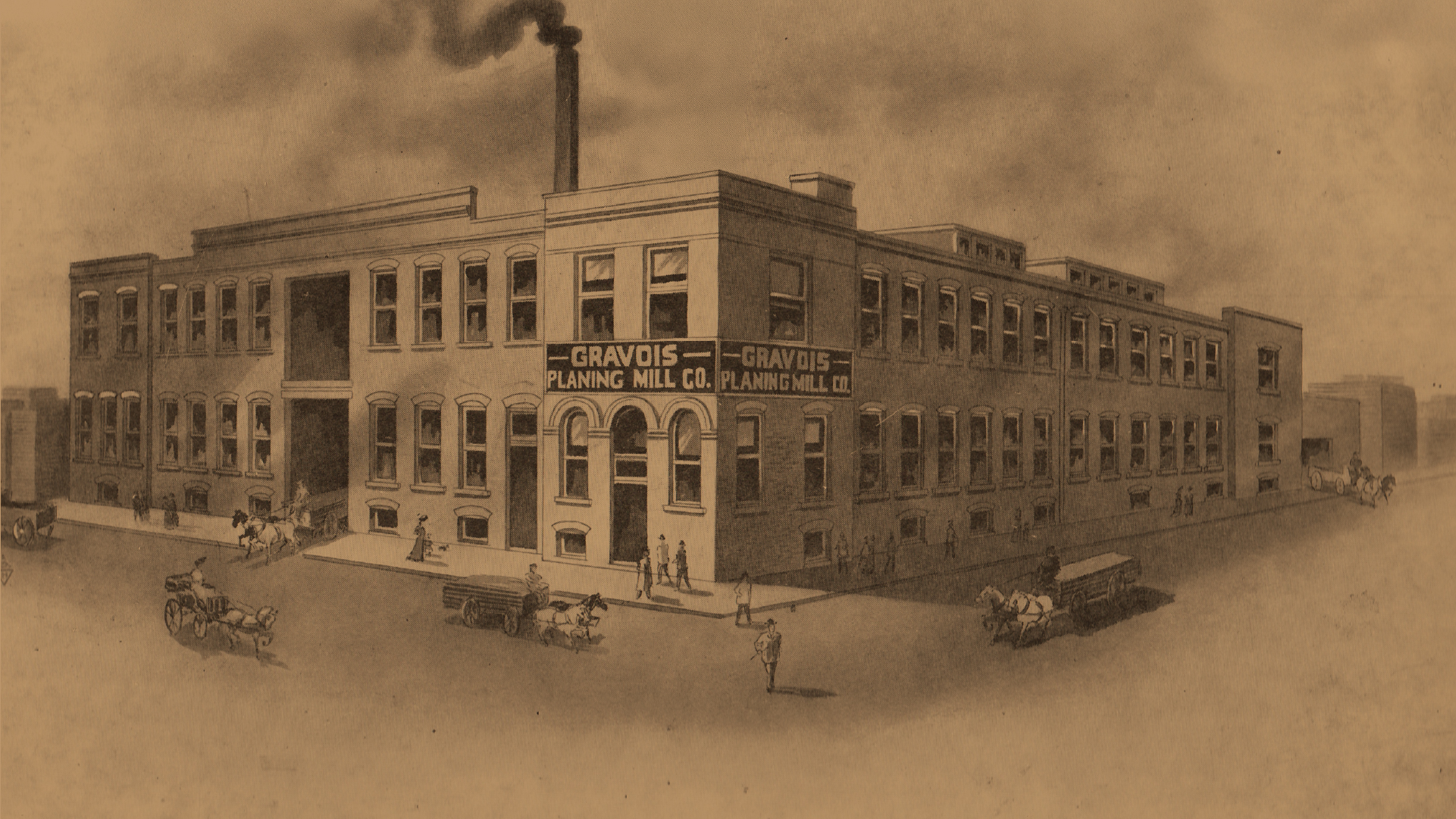
In 2025, with a change in ownership and a landmark project in the Saint Louis Symphony’s $140mm Powell Hall renovation, the historic mill was finally ready to tell its story. (If these walls could talk, indeed.)
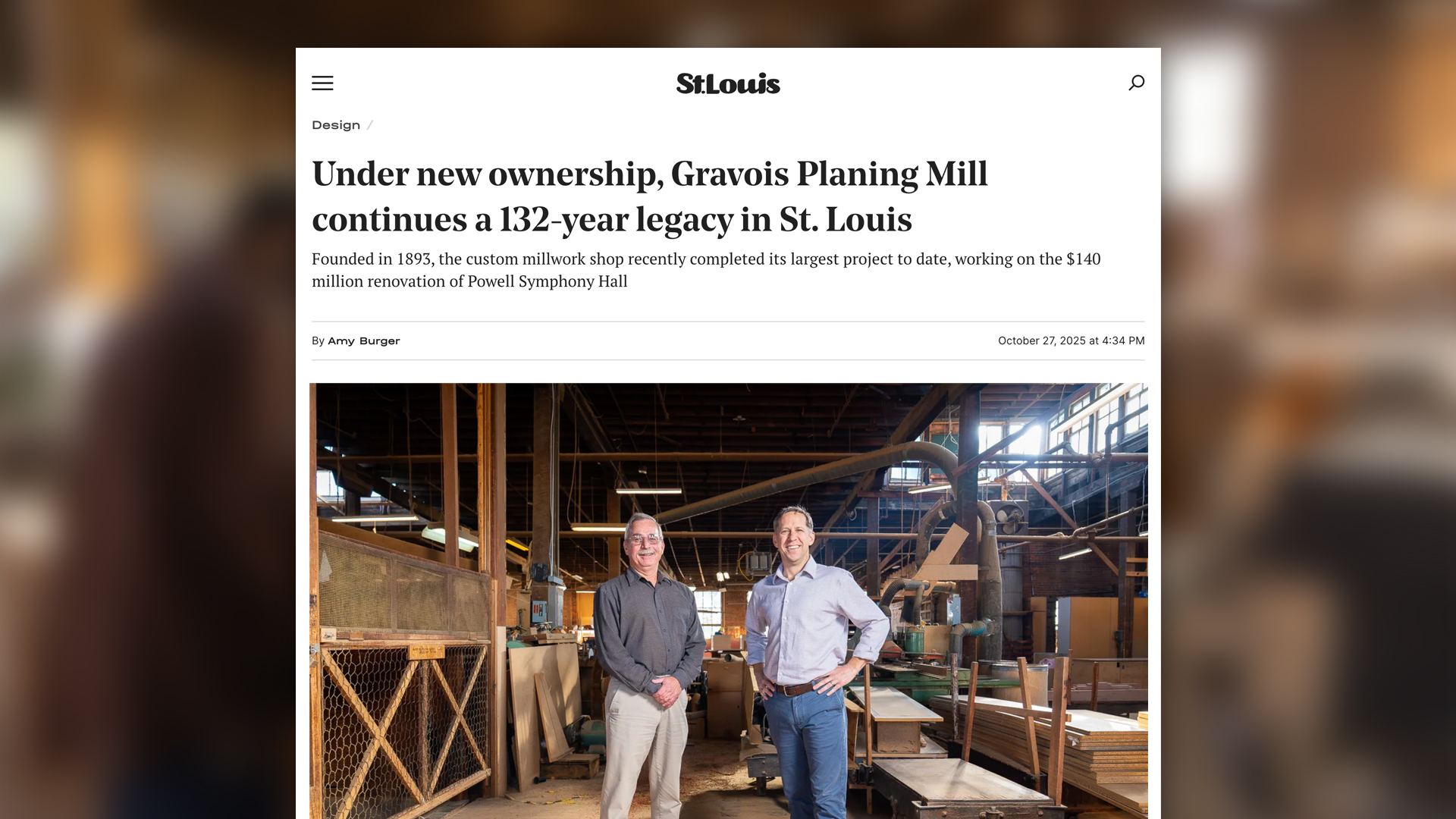
The Type: Plane Doesn’t Mean Plain
Exploring Gravois Planing Mill’s building and archives made us feel like we’d died and gone to design-nerd heaven. The type artifacts etched into the equipment alone were enough to make us weep (more on type later.)
And the natural light-drenched, multi-story, high-ceilinged “shop” was a living museum: steeped in history, and heavily annotated by generations of woodworkers. The mill’s unspoken ethos—keep what works, upgrade what doesn’t—was already there. It just needed to be dusted off a little.
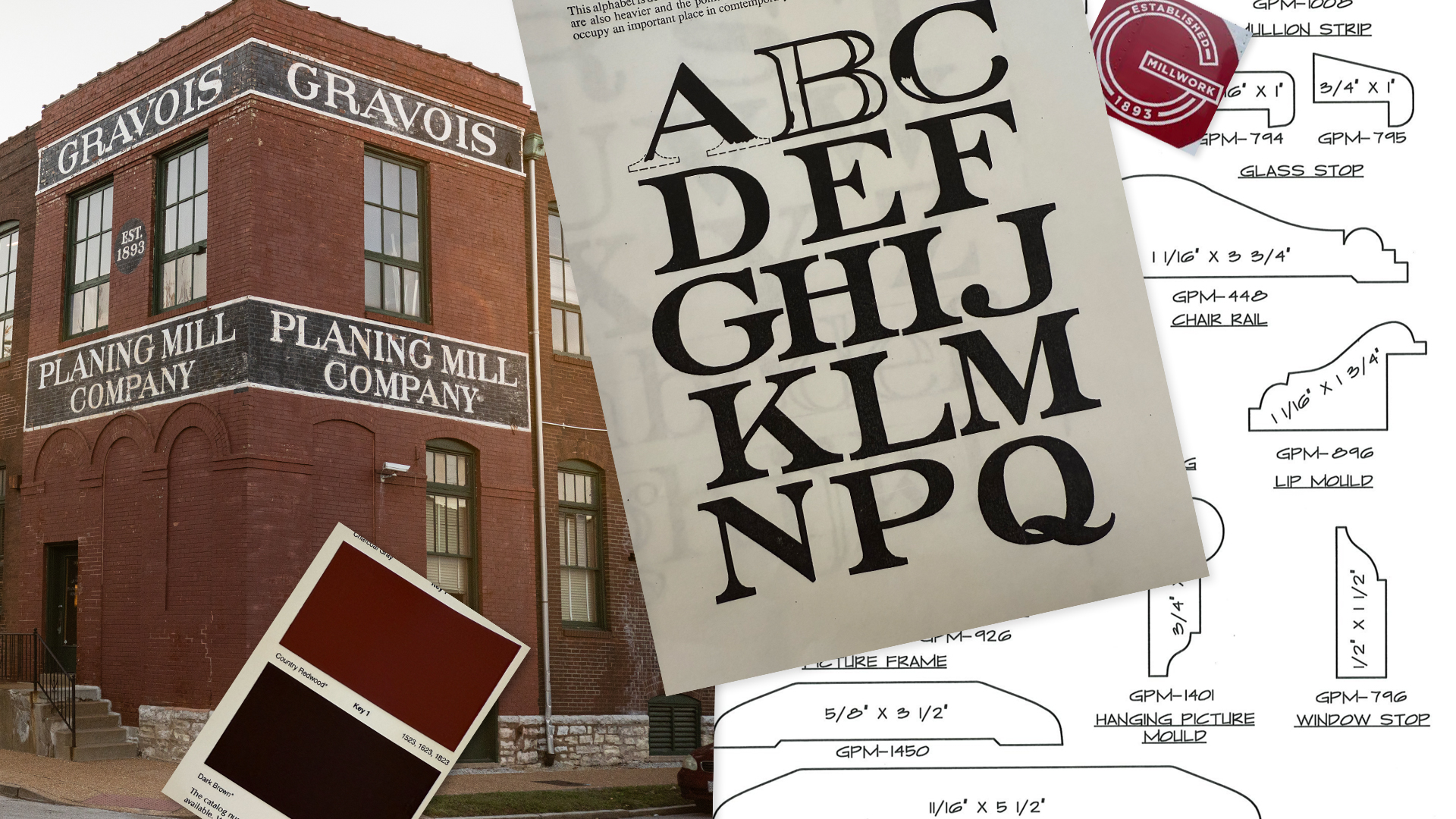
With a lot of source material to work with, the visual identity system came together in a way that felt truly authentic.
We tapped fellow nerds and frequent collaborators XYZ Type to craft a custom wordmark using the historic handpainted facade as a starting point.
From there, we balanced the utilitarian with the decorative: drawing inspiration from the mill’s extensive catalogue of custom molding to create a flexible design system that celebrates the intricacy of each profile and showcases the breadth of their offerings.
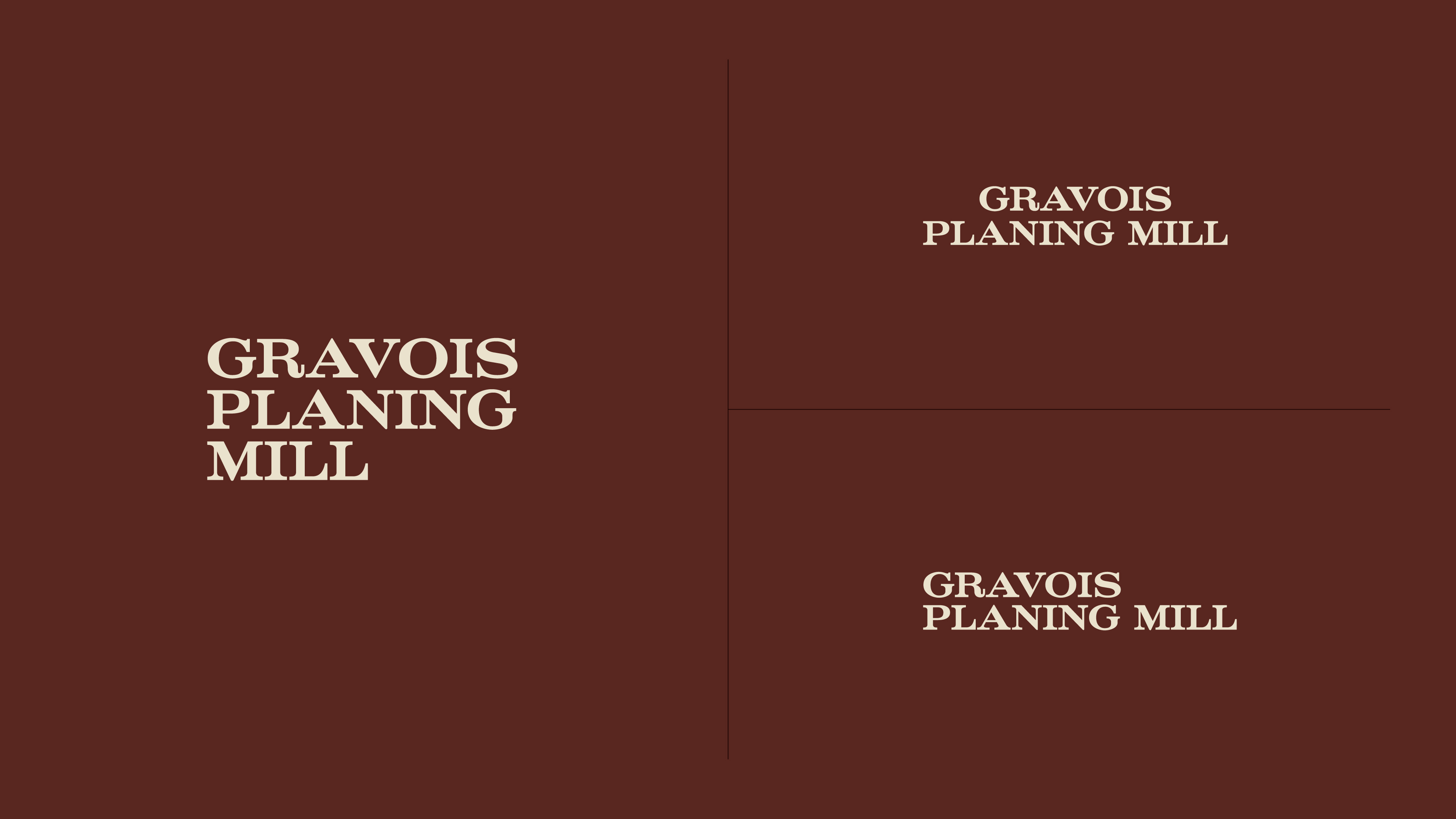
The new, custom wordmark in various alignments.
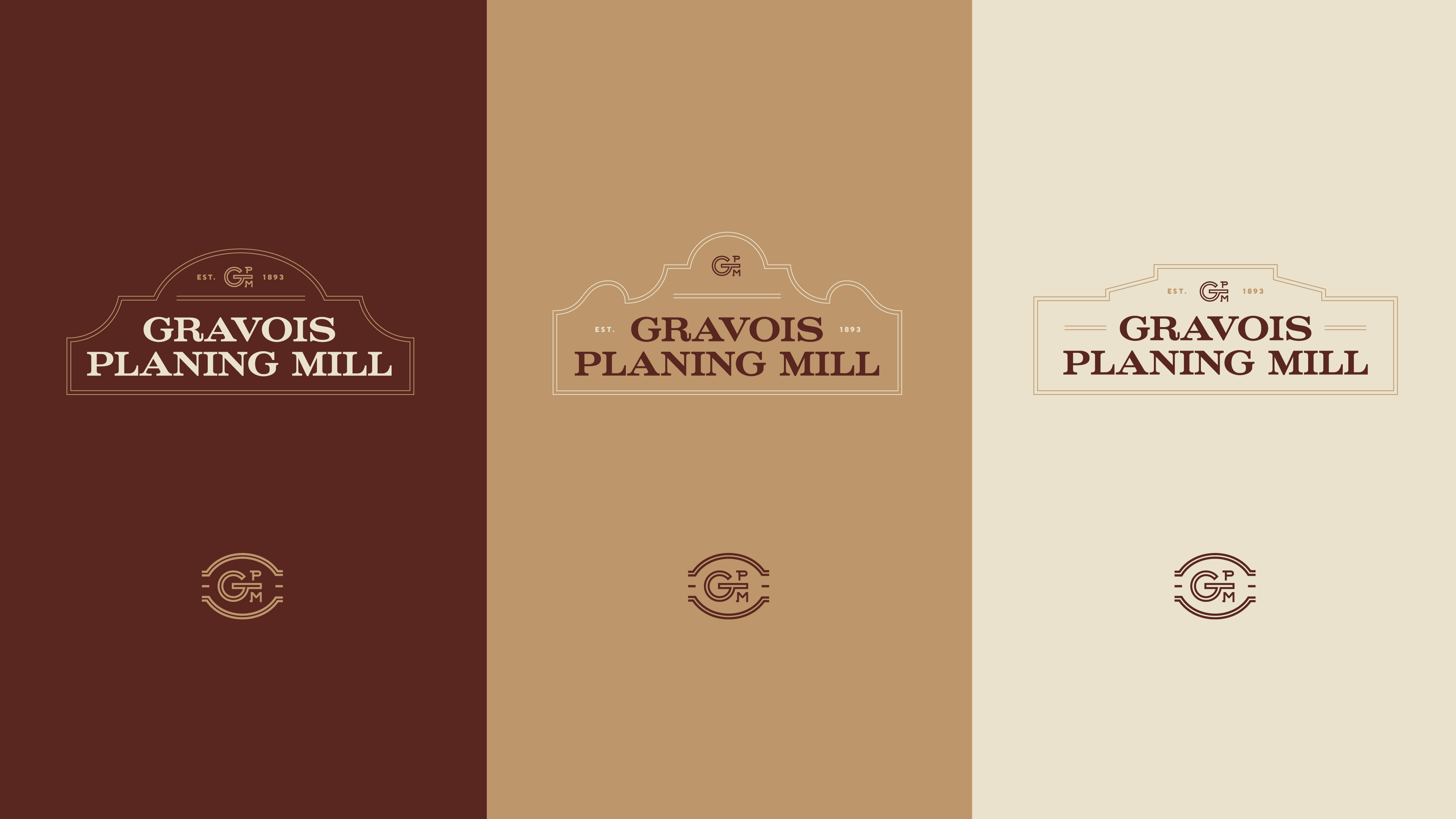
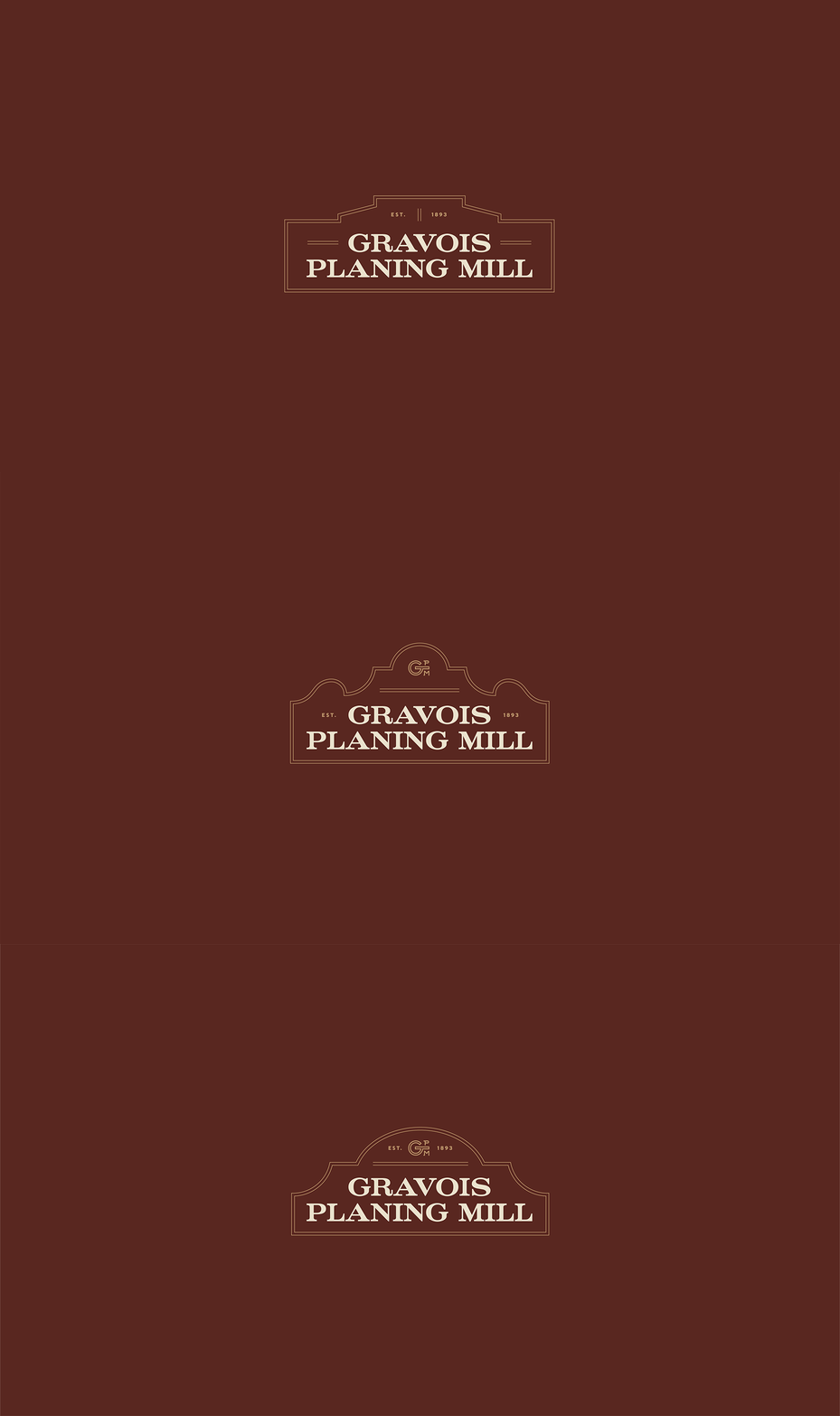
The updated wordmark was enclosed in a container system that was designed to directly mimic GPM’s custom molding profiles. The secondary mark was drawn to pick up on design cues from the previous version of the logo, including a funky G with an extended, slab chin.
The Copy: Subtle but Substantial
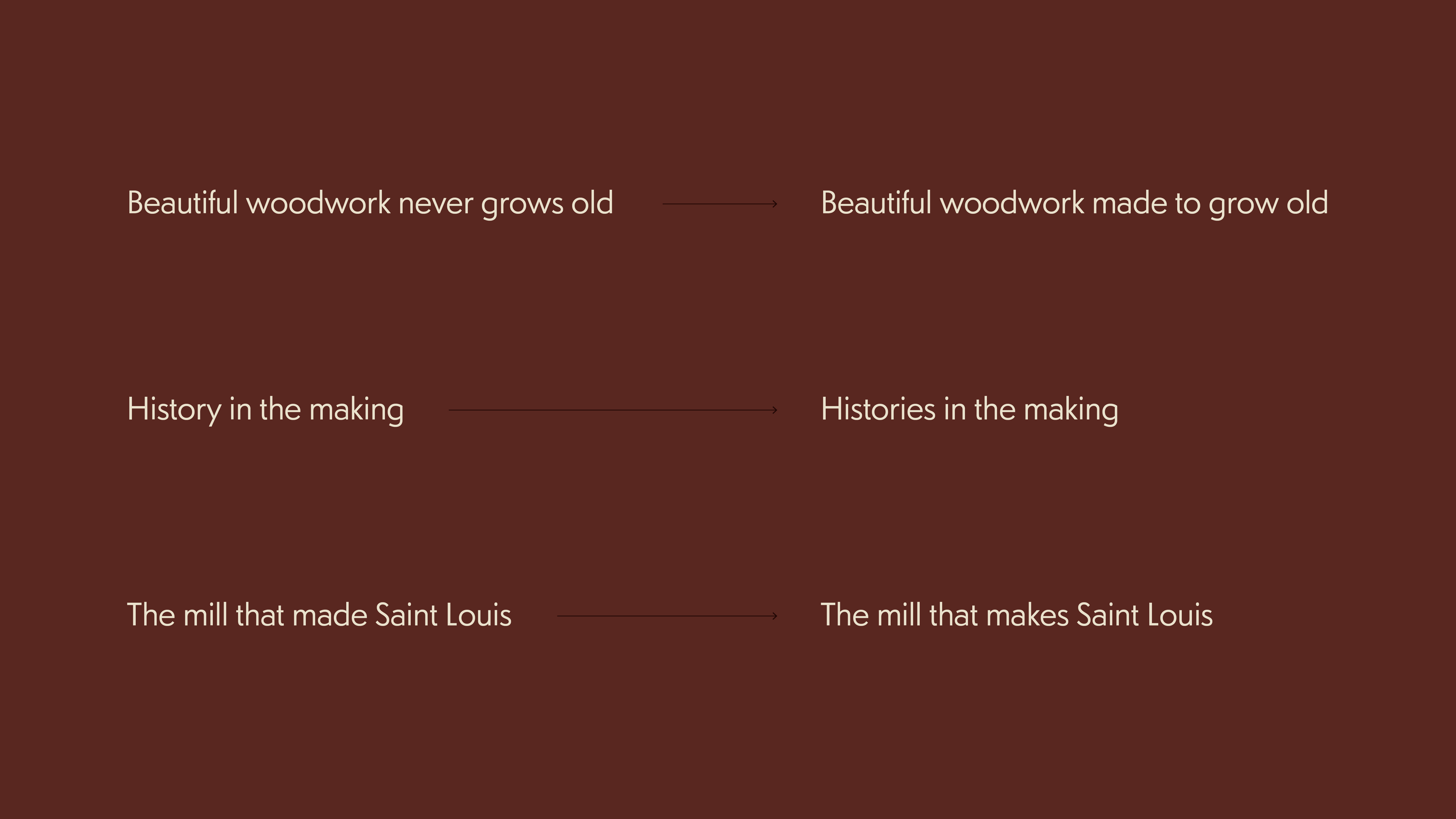
We didn’t just inherit a heap of archival photography, we also got our mitts on countless old product catalogs, press articles, and print collateral. Among these documents were generations of copy that evolved in tone and emphasis alongside the company and the broader culture. One old copy sample snagged our attention as something that could be simply, subtly, and elegantly updated, and inspired us to keep playing with tense as a nod to both a remarkable legacy and a bright future.
The Photography: (Wood)grainy is Good
We wanted Gravois Planing Mill’s web experience to mimic the actual experience of spending an afternoon in the space. So we worked with Kurt Simpson at The Shop to capture expansive videography and still photography of the team at work. Dramatic, light-drenched shots of bench sanders, rosette routing jigs, and Jorgensen clamps do more than look nice on the homepage.
They remind prospective collaborators that, even with the most cutting-edge machinery, fine woodworking remains a highly specialized field made possible by real people with exceptional craftsmanship.

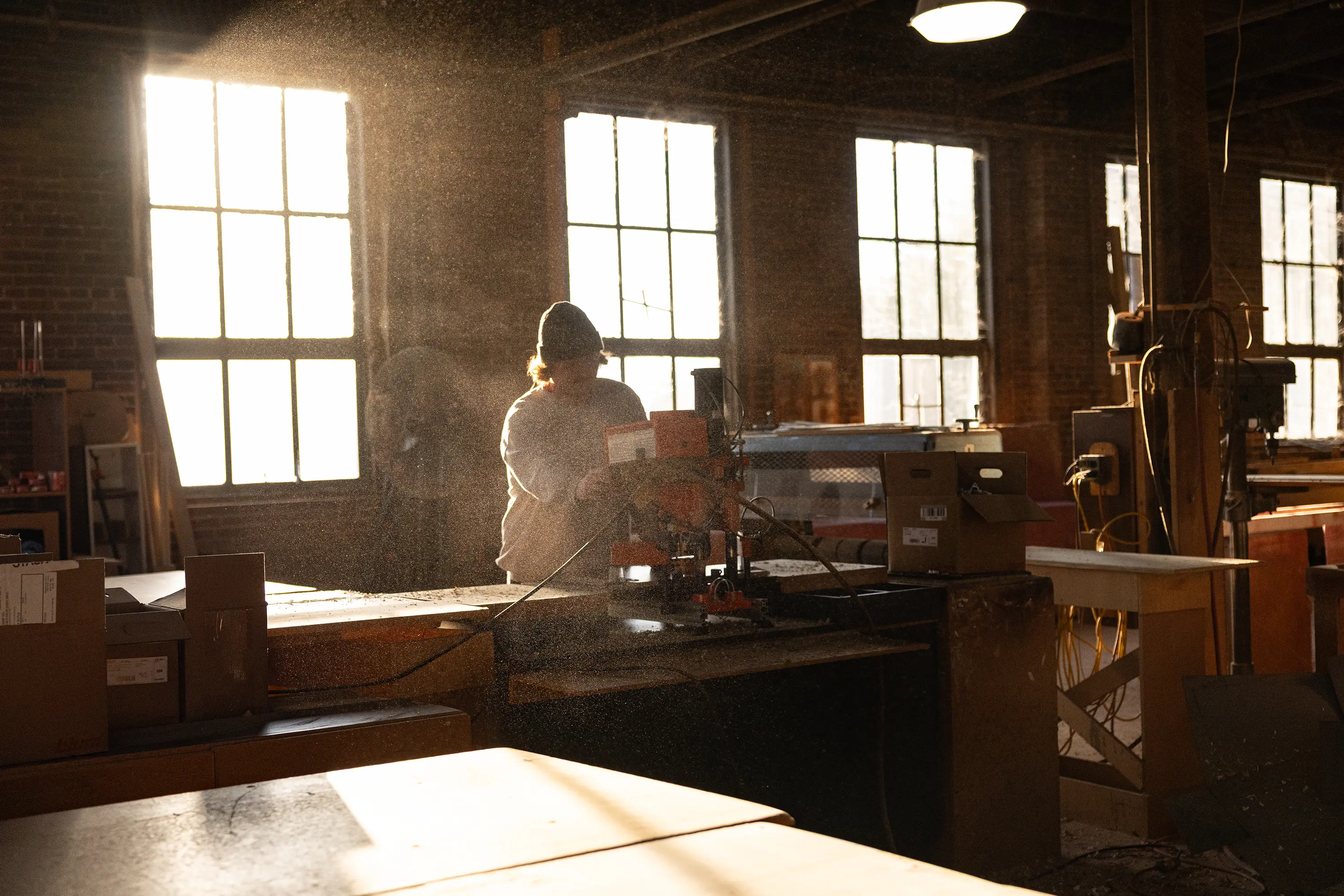
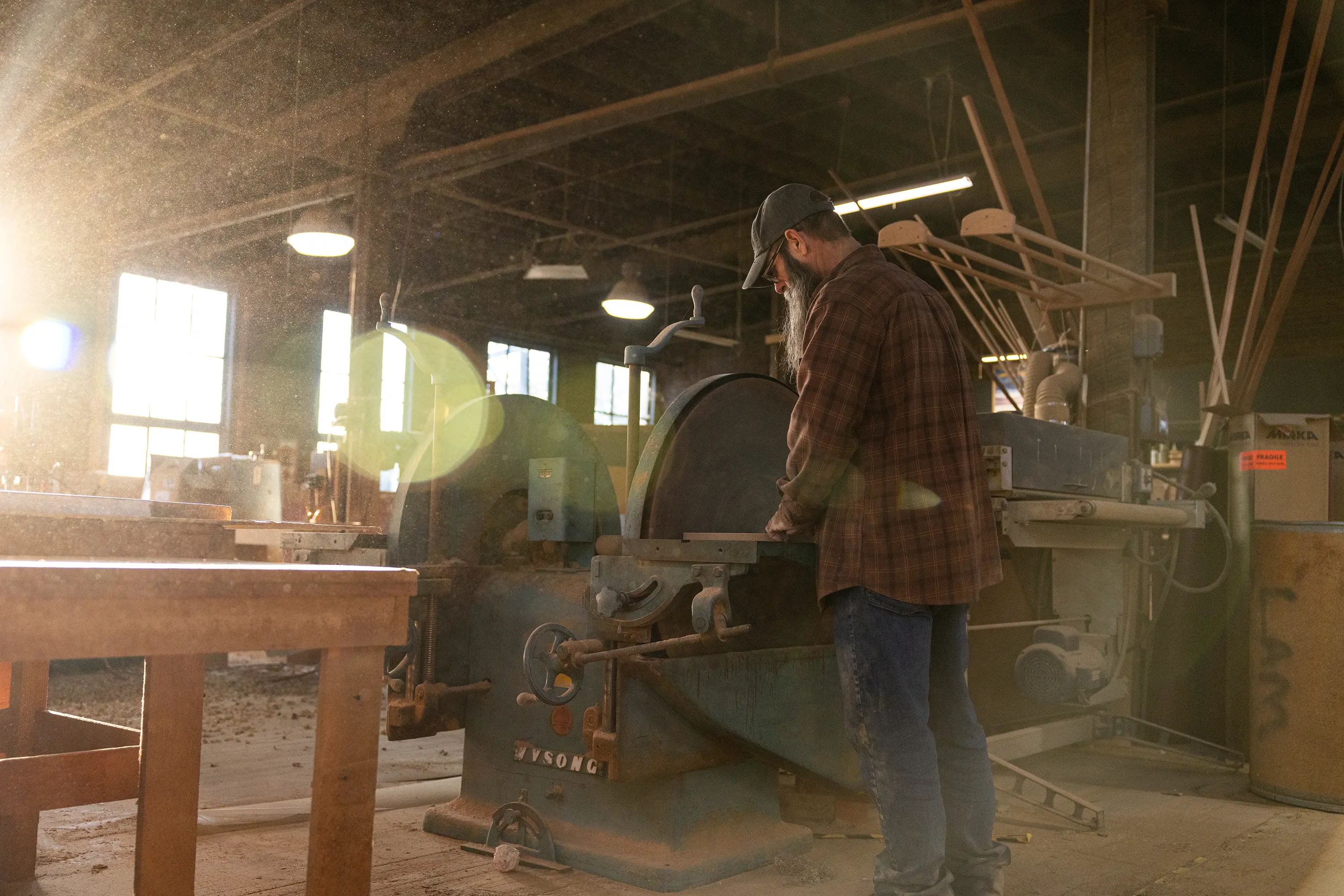
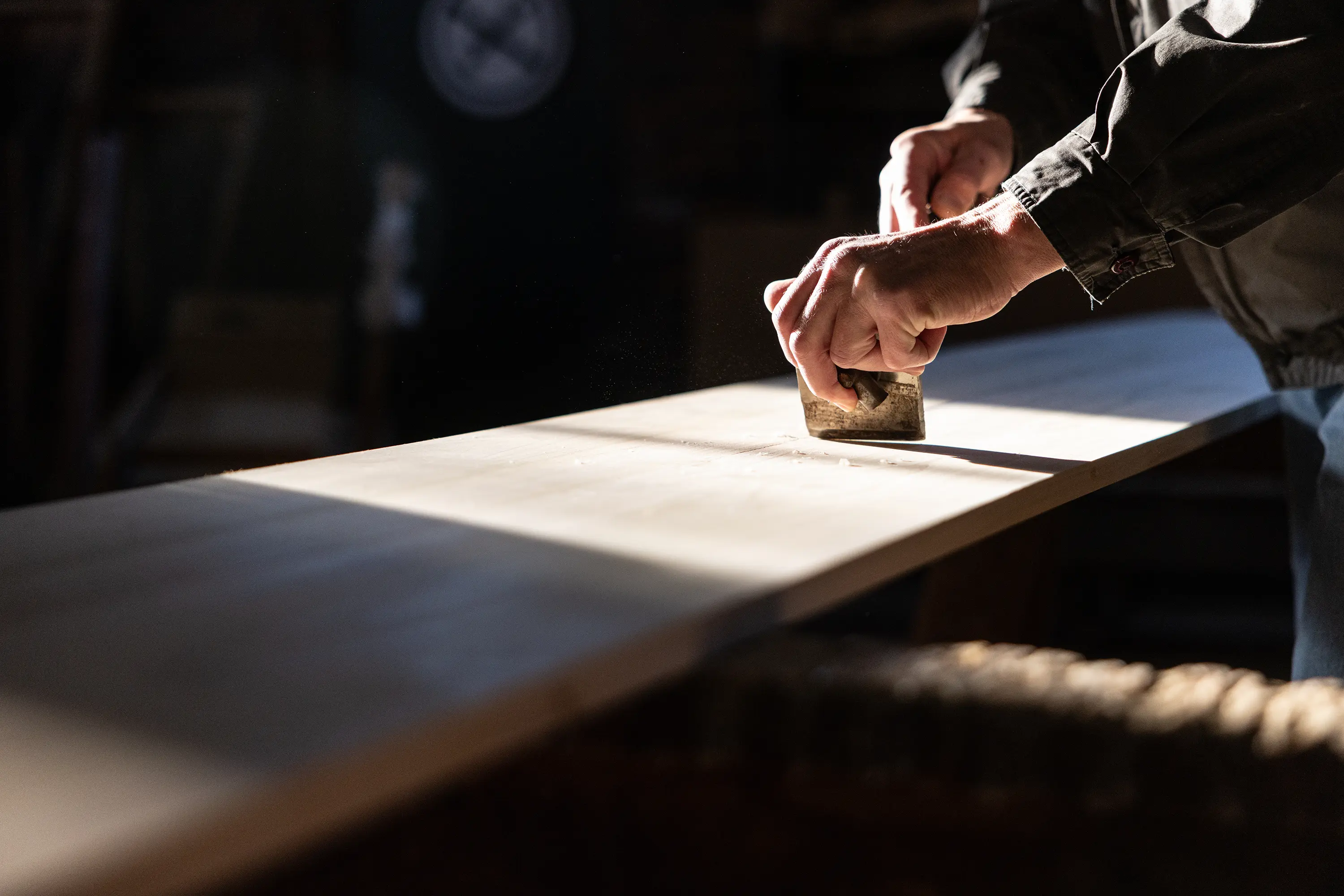
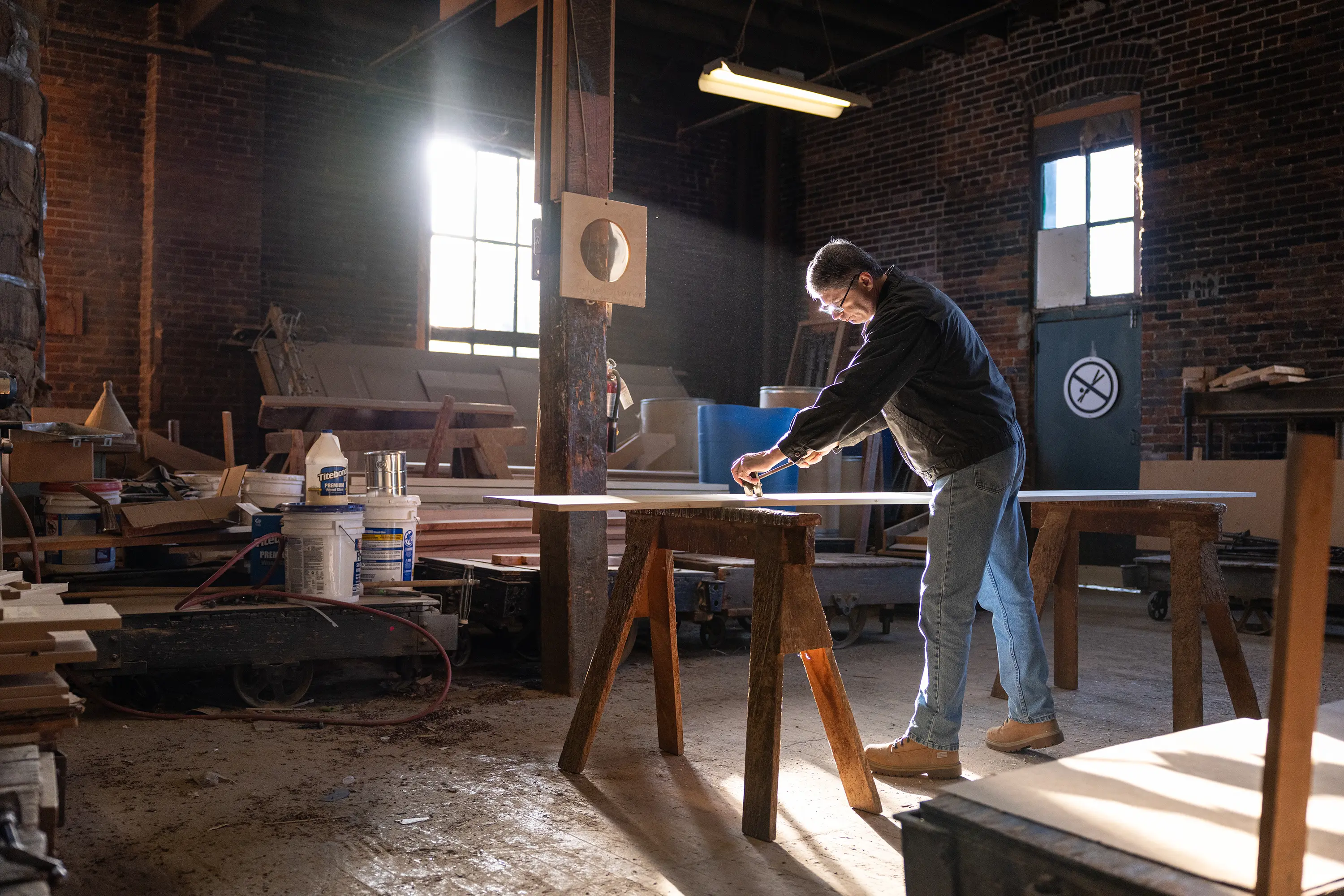
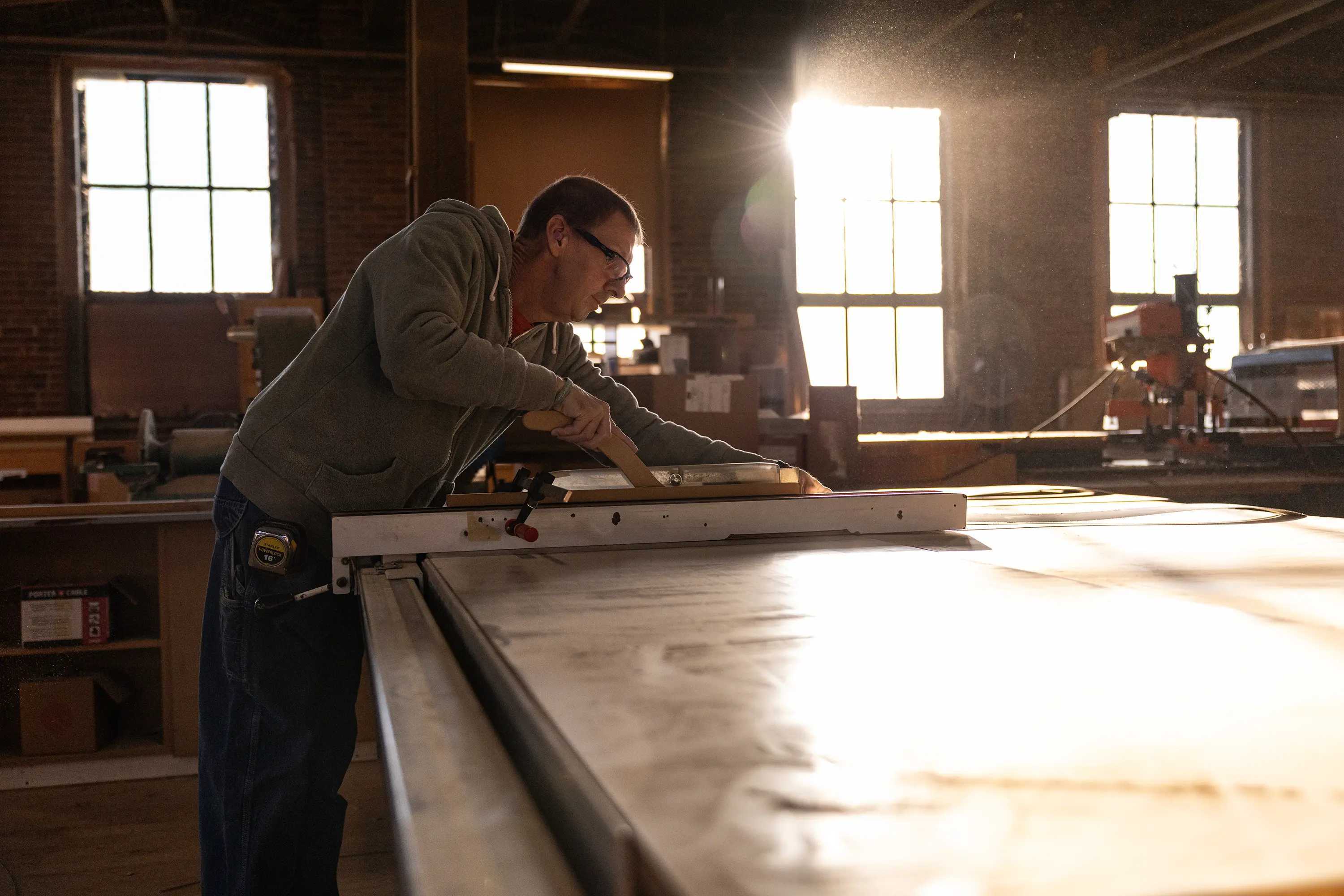
And under a thick layer of sawdust, there’s always a sense of something more to uncover. To keep that feeling, we layered in all the ephemera that makes working on a 132-year-old brand so cool, creating a site that’s dusted with artifacts and easter eggs and invites users to poke around.
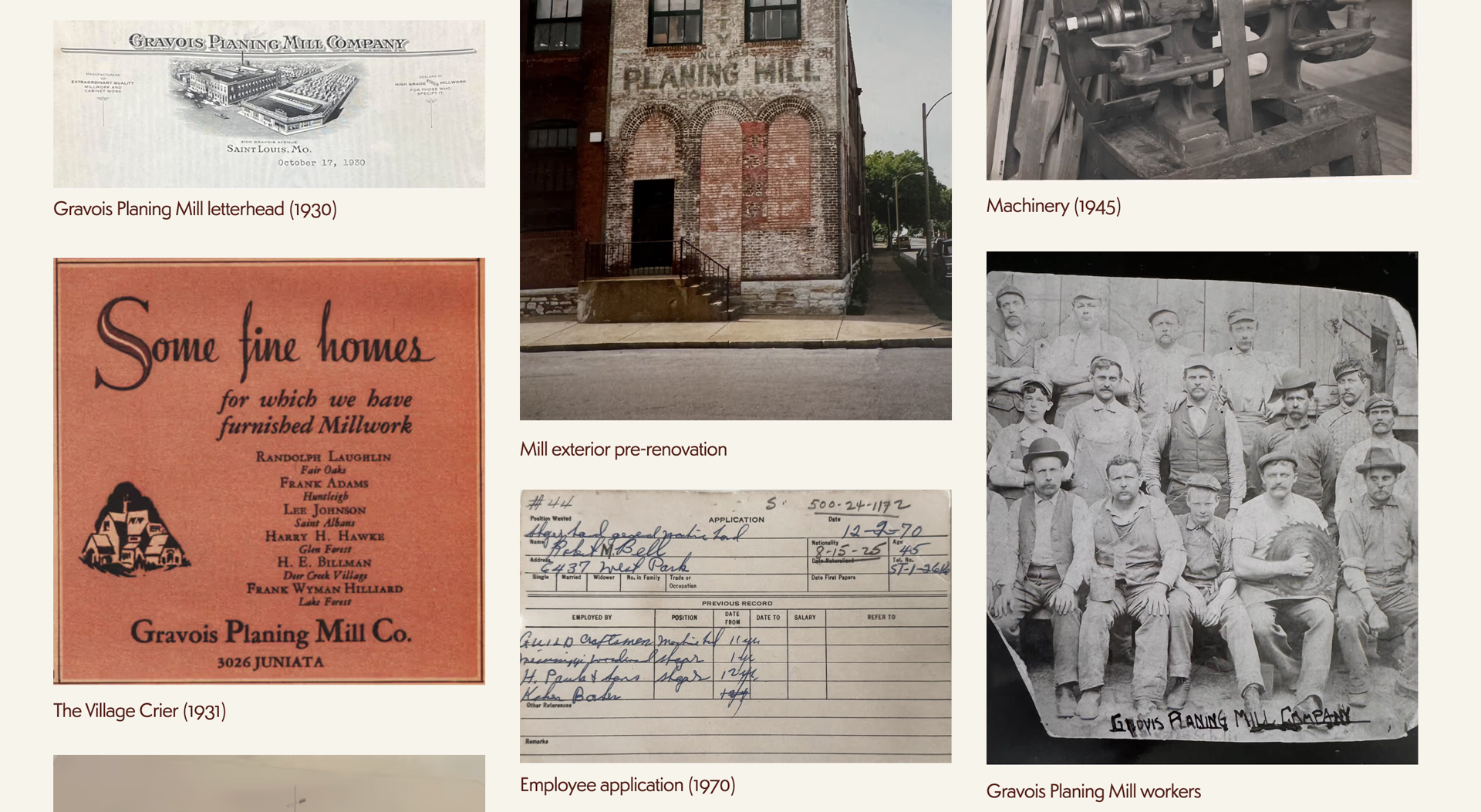
A snapshot from the Archive section of the new website, featuring ephemera dating back 100+ years.
The Site: Good Work Speaks For Itself
After decades of doing business primarily by word of mouth, Gravois Planing Mill’s new ownership decided to pursue a rebrand as an opportunity to reassure existing clients and attract new ones.
The new website was designed to do just that from every touchpoint, with a site structure that clearly (and immediately) divides projects into Commercial and Residential to correct a common and costly misconception: Yes, they take on Residential projects.
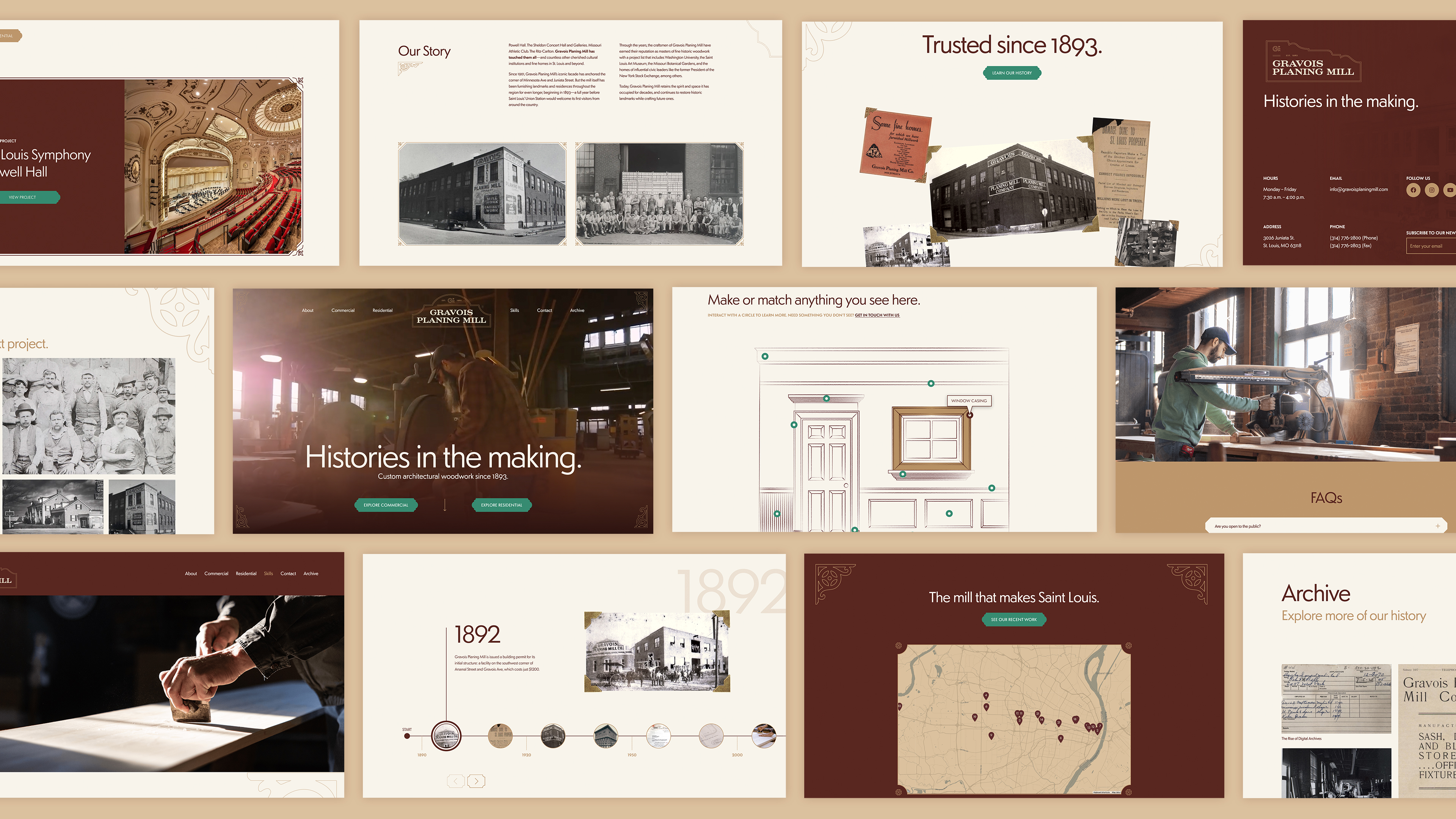
An interactive map lets users explore the dozens of culturally significant projects Gravois has touched over the decades, while the About page expands on the mill’s history with an interactive timeline feature that makes great use of the archival photography.
On the Skills page, another interactive graphic doubles as a glossary, illustrating industry terms for some of the shop’s most commonly requested millwork features and emphasizing its custom capabilities.
Instead of a “Press” section, we opted for an Archive page as a permanent reminder that today’s projects are a seamless extension of a multigenerational legacy. Photos, receipts, and other historic ephemera bleed continuously into recent news clippings. The result? A virtual museum that honors the mill’s history and invites new customers to own a piece of it.
Finally, we made sure a user-friendly CMS on the back-end is easier than anything else any employee does all day.
Visit the site
www.gravoisplaningmill.com
Jason Bridwell
President, Gravois Planing Mill
More case studies
South Grand
How we created a brand platform versatile enough for a business district that’s home to both punk bars and baby boutiques.
Swift Lift
How we branded and launched a category-first hunting product using a delicate semi-endangered bird as an (effective) mascot.